Duyuru

Collapse
No announcement yet.

Sabun cevizi, SABUNAGACI, SOAPNUT, sapindus mukorossi

Collapse
X
  • Filtrele
  • Zaman
  • Göster
Hepsini Sil
new posts

  • Sabun cevizi, SABUNAGACI, SOAPNUT, sapindus mukorossi


    SABUNAGACI

    Avrupa ve Amerika'da günlük hayatta temizlik için sıkça kullanılan “SOAPNUT” diye adlandırılan Sabun Cevizi meyvesinden ve bir Kimya Mühendisinin Türkiye'de doğal deterjan uygulamasini yaygınlaştırmaya yönelik çabalarından doğan bir girişimdir.

    Doğaya dönüşe teşvik etme çabası yanında, doğaya toprağa karşı sorumlulukları hatırlatan yazılarla, kimyasallara alternatif uygulama ve ürünlerden ve alternatif insanlardan bahseden farkındalaştırma isteğinden bir bloga dönüşmüştür.
    Burada bitki olan bir deterjan üründen Sabun Cevizi'nden bahsedilmektedir. Kişisel bir hobinin ürünü web sitesinde sunulmaktadır.


    Uyarılar:Bu internet sitesindeki tüm bilgiler, görseller ve bağlantılar bilgi amaçlıdır. Bu sitenin içeriği bir yetkili kuruluş ya da tıbbi uzman tarafından sağlanmamakta ve değerlendirilmemektedir. Ürünlerin kullanımından doğabilecek riskleri ve kullanım önerilerini doktorunuzdan veya bir sağlık kuruluşundan edinebilirsiniz. SABUNAGACI markası altında www.sabunagaci.com web sitesindeki bilgi, görsel ve bağlantıları bilgilendirme amaçlı sağlamış olup tüketicinin ürünü amacı dışında kullanmasından doğan zararlardan sorumlu değildir.
    SABUNAGACI CARBON FOOTPRINT SOSYAL SORUMLULUGU :
    https://drive.google.com/file/d/0B3P...it?usp=sharing
    Sabun Cevizi Nedir? Sapindus Mukorossi:

    -%100 doğal bir meyvedir.
    -Anti-alerjeniktir
    -Egzama Mantar Sedef gibi cilt hastalıklarına Tedavi edici etkisi vardır.
    -Cilt ve Doğa dostudur: Topuklardaki çatlaklara düzenli(her sabah) sürüldüğünde cildi iyileştirici etkisiyle kapatır.
    -Granit ve diğer yüzeyler için özellikle cilalı yüzeyler için mükemmel temizleyici
    – Krom ve paslanmaz çelik yüzeyler için mükemmel
    – Araba temizleyici olarak için mükemmel
    -Halılarınızı yıkamak için mükemmel: yumuşak parlak tertemiz halılar. Ekstra köpürtücü içermediğinden makinalarda güvenli kullanım
    – Sülfatsız, Parabensiz,ftalatsız,fosfatsız,petro-kimyasalsız, boyasız ve ağartıcısız!
    – Toksik madde içermez, doğada çözünürdür.
    – Bulaşık ve Çamaşır Makinesine uygun
    – Mükemmel temizlik için Pahalı deterjalara çevresel zarara ve Yumuşatıcıya gerek yok
    – Hassas ciltler ve de narin çamaşırlar için zararsız ürün


  • #2
    Sabun cevizi, Sabun Cevizi Kabuğu, sapindus mukorossi
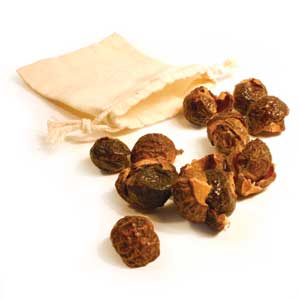
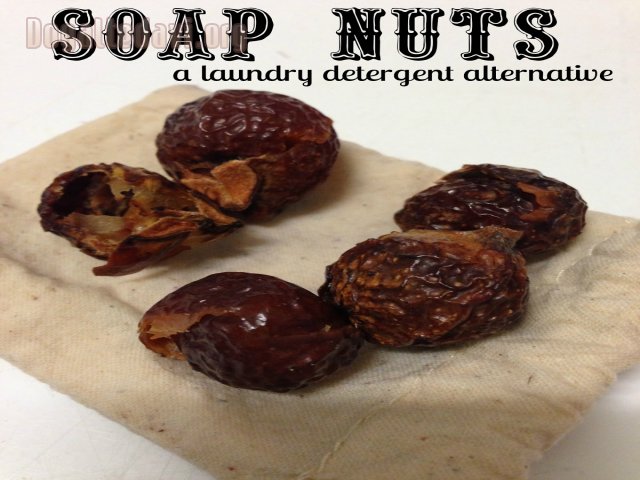
    Hindistan’da Himalayalar’da yetişen ve asırlardır bu bölge insanı tarafından temizlik amaçlı kullanılan Sabun Cevizi Kabuğu meyvesi son yıllarda da organik ve doğal ürünlere artan ilgi nedeni ile başta Avrupa, Amerika ve diğer gelişmiş coğrafyalarda yoğun ilgi görüyor. Bu meyve kesinlikle yenilmez, sadece temizlik amaçlı kullanılır.

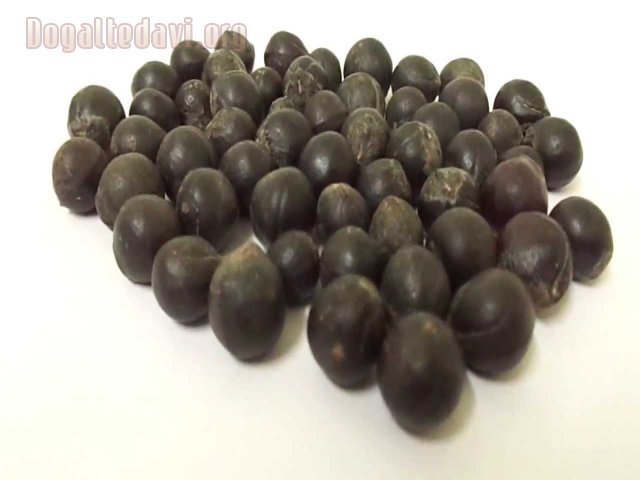
    Kahverengi küçük bir hurma görünümünde olan Sabun Cevizi Kabuğu Kasım ve Aralık aylarında hasat yapılır. Kuzey Hindistan’da zeytin ağaçları gibi genelde tepelik alanlarda kendi halinde yetişen Sabun Cevizi Kabuğu meyvesi yerel köylüler tarafından toplanılır. Bu ürünler çekirdekleri çıkartılıp güneşte kurutulurlar. Bu esnada hiç bir kimyasal malzeme kullanılmaz.

    Sabun Cevizi Kabuğu içerdiği aktif madde saponin ile doğal deterjan etkisi gösterir. Burada en önemli şey her Sabun Cevizi Kabuğu’u aynı olmayacağıdır. İstenilen temizlik sonucunun alınması için özellikle Himalayalar’da yetişen sapindus mukorossi türünün kullanılması gerekir.

    Yaklaşık 10 çeşidi bulunan Sabun Cevizi Kabuğu’da doğru ürünün bulunması, hijyenik ortamlarda çekirdeklerinden ayrıştırılması, serin ortamda depolama yapılması ve yıkamada kullanılırken gerekli yardımcı maddelerle birlikte kullanılması temizlik kalitesini artırıcı etkenlerdir.

    Türkiye’de satışa sunulan Sabun Cevizi Kabuğu markalı ürünlerde Saponin oranı minimum %12-15 olmasına özen gösteriliyor. Bu oran ne kadar yüksek olursa temizlik kalitesi de o oranda yüksek oluyor.

    Ürün hem ekolojik ve ekonomik aynı zamanda organik tarım yolu ile elde edildiği için doğaldır.

    Kullanım Şekli

    => ÇAMAŞIR YIKAMAK İÇİN Sabun Cevizi Kabuğunu nasıl kullanacağım?

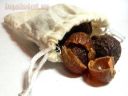
    Çamaşır yıkamada Sabun Cevizi Kabuğu meyvesi kese içinde kullanılır.

    5-6 adet Sabun Cevizi Kabuğu yarım kabuğu yıkama kesesi içine konulup kesenin ağzı sıkıca bağlanır.

    Çamaşırların renk ve cinsine bağlı olarak derece ayarları yapılıp makine çalıştırılır. Yıkama sonrası kese makineden çıkartılıp sonraki yıkamalar için uygun bir yerde muhafaza edilir.

    Çamaşırların renk ve dokuları uzun süre bozulmaz. Doğal bir ürün olduğu için çamaşırların dokularına ve renklerine zarar vermez.

    Çamaşırlar yumuşacık ve tertemiz olur. Çamaşırlar mikroplardan, mantarlardan arındırılır. Hijyen sağlanır. Hijyenik ve antiseptiktir.

    Alerji oluşturan faktörler ortadan kalkar. Bazı hassas tenlerde kimyasal deterjanlar ile yıkanan çamaşırlar ile temas sonrası alerji oluşur. Sabun Cevizi Kabuğu bu sorunu ortadan kaldırır.

    Yaşlı ve çocukların çamaşırları için özellikle tavsiye edilir. Hipoalerjeniktir.

    - Yumuşatıcı kullanmam gerekiyor mu?

    Yumuşatıcı kullanmaya gerek kalmaz. Doğal yumuşatıcı etkisi vardır.

    - Bir kese içindeki Sabun Cevizi Kabuğunu kaç yıkamada kullanabilirim?

    Bir kesedeki Sabun Cevizi Kabuğu ile 60 derecede ve altında 4 yıkama, 60 derece ve üzerinde 2 yıkama yapılabilir.

    Yukarıda belirtilen yıkamalar sonunda Sabun Cevizi Kabuğu rengi solgun, koyu gri bir duruma gelir. Bu renk değişimi yapısındaki saponin maddesinin tamamen tükendiği anlamına gelir.

    Tamamen doğal olan kalıntı Sabun Cevizi Kabuğu toprak için doğal gübre özelliği taşır. Sabun Cevizi Kabuğunu temizlik için kullandıktan sonra bahçenizde de kullanmanızda hiçbir problem olmaz.

    => BULAŞIK YIKAMAK İÇİN Sabun Cevizi Kabuğunu nasıl kullanırım?

    Bulaşık makinesinde Sabun Cevizi Kabuğu kullanırken iki opsiyon vardır.

    1. Aynen çamaşır makinesinde olduğu gibi kese içersinde ki Sabun Cevizi Kabuğu kabukları makinenin içersine yerleştirerek yıkama yapılır. Sabun Cevizi Kabuğu Doğal Ağartıcı ile Sabun Cevizi Kabuğu Doğal Kireç Önleyici Tozlar bulaşık makinesinde de aynen çamaşır makinesinde olduğu gibi kullanılabilir.

    2. Likit Sabun Cevizi Kabuğu çözeltisi makinenin deterjan haznesine ilave edilir. Bu yöntem de sonuç elde etmek daha uzun uğraşı gerektirir.

    Sabun Cevizi Kabuğu Likit (5 kabuktan elde edilen Sabun Cevizi Kabuğu çözelti) bulaşık makinesinin deterjan haznesine konulur. Bulaşıklarda parlaklık artırılmak isteniyorsa; bulaşık makinesinin parlatıcı gözüne bir miktar sirke ilave edilir. Daha sonra normal yıkama talimatı uygulanır.

    => GENEL TEMİZLİK İÇİN Sabun Cevizi Kabuğununasıl kullanırım?

    Genel Temizlik için Ekonta Likit olarak kullanılır.

    - Sabun Cevizi Kabuğu Likiti nasıl hazırlayacağım?

    5 adet yarım Sabun Cevizi Kabuğu kabuğu yarım litre su içersinde 10 dakika kaynatılmalı ve belli bir süre soğutulduktan sonra süzülerek çözelti posalardan ayrıştırılmalıdır.

    Posalardan ayrıştırılan Sabun Cevizi Kabuğu Likit birçok zor lekenin çıkartılmasında ve tüm genel temizliklerde kullanılabilir.

    => CAM TEMİZLİĞİ İÇİN Sabun Cevizi Kabuğunu nasıl kullanırım?

    Genel temizlik için hazırlanan Sabun Cevizi Kabuğu Likit (5 yarım kabuk/lt) 'den 20 ml alınır ve 20 ml sirke ile karıştırılır ve bu karışım 250 ml su üzerine ilave edilir. Bu karışım camların silinmesinde kullanılır.

    => EL YIKAMA İÇİN Sabun Cevizi Kabuğunu nasıl kullanırım?

    El sabunu yapmak istiyorsanız yine aynı şekilde çözelti hazırlanmalı ama bu kez miktarlar değiştirilmelidir. Yarım litre su içersin de yaklaşık 5 adet yarım kabuk kaynatılmalı, limonsuyu ve esans ilavesi yapılmalıdır. Oda sıcaklığında 7-10 gün arası bu sabun dayanabilir.

    => MÜCEVHER TEMİZLİĞİ İÇİN Sabun Cevizi Kabuğunu nasıl kullanırım?

    5 Sabun Cevizi Kabuğu yarım kabuk/lt şeklinde hazırlanan Sabun Cevizi Kabuğu likit çözeltisi içersine mücevherler özenle konulmalı ve belli süre bekletilip yavaşça lekeler ovulmalıdır. Doğal bir ürün olduğu için her hangi bir zarar vermez.

    => EVCİL HAYVANLAR İÇİN ŞAMPUAN olarak Sabun Cevizi Kabuğunu nasıl kullanırım?

    Evcil hayvanlarınızı Sabun Cevizi Kabuğu likit ile yıkadığınızda yumuşak ve ipeksi tüyler ortaya çıkar. 200 ml su içerisine 5 adet yarım Sabun Cevizi Kabuğu atılıp 5 dk kaynatılır. Soğumaya bırakılan çözelti daha sonra bir miktar ılık su eşliğinde uygulanır. Evcil Hayvanınızın gözünü koruyarak ve derisine nüfuz edecek şekilde özenle ovalayarak yıkadığınızda uzun süre parazitlerden arınmış olduğunu göreceksiniz.

    => SAÇ YIKAMA İÇİN Sabun Cevizi Kabuğunu nasıl kullanırım?

    3-5 adet yarım Sabun Cevizi Kabuğu ile hazırlanan çözelti normal şampuan olarak kullanılır. Kepek önleyici etkisi bulunmaktadır. Saçlarınıza yumuşaklık verir, saçlarınız kolay şekil alır.

    Yorum yap


    • #3
      Sapindus Mukorossi . com - The Complete Soapnut Guide!


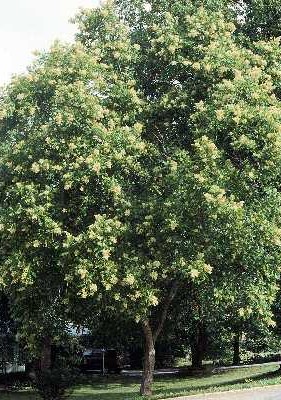
      A deciduous tree found wild in north India, usually with 5-10 pairs of leaves, solitary with large drupes. This tree belongs to the main plant order Sapindaceae and family Sapindeae. The species is widely grown in upper reaches of the Indo-Gangetic plains, Shivaliks and sub-Himalayan tracts at altitudes from 200m to 1500m. Also known as soap-nut tree, it is one of the most important trees of tropical and sub-tropical regions of Asia.

      This tree flourishes in deep clayey loam soil and does best in areas experiencing nearly 150 to 200 cm (60 to 80 in) of annual rainfall. The trunk is straight and cylindrical, nearly 4 to 5 m (13 -16 ft) in height. The canopy comprising side branches and foliage constitutes an umbrella-like hemispherical top measuring about 5 m (16 ft) in diameter. The tree can reach a height of 25 m (82 ft) and a girth of 3 to 5 m (9-16 ft) in nearly 70 years of its existence. The wood is hard and light yellow in color. It is close-grained and compact weighing about 30 kg (66 lbs) per cubic foot. The wood is utilized for rural building construction, oil and sugar presses, and agricultural implements.

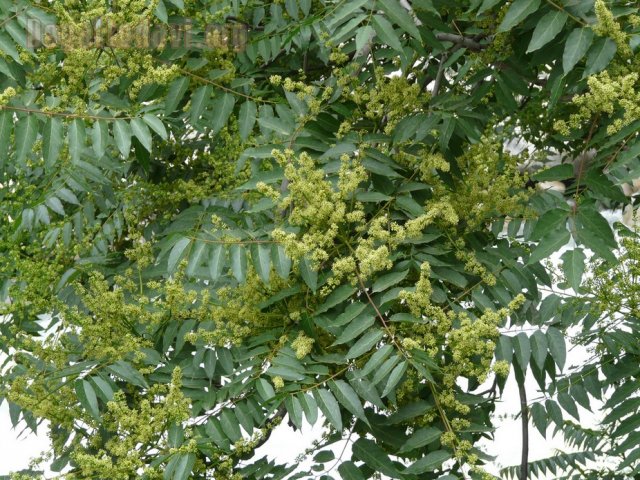
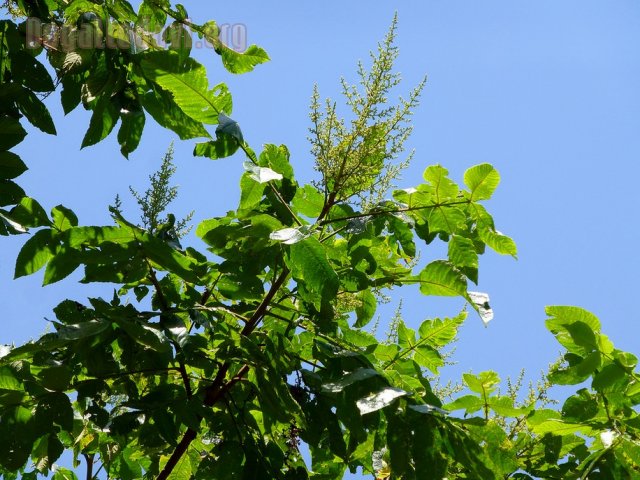
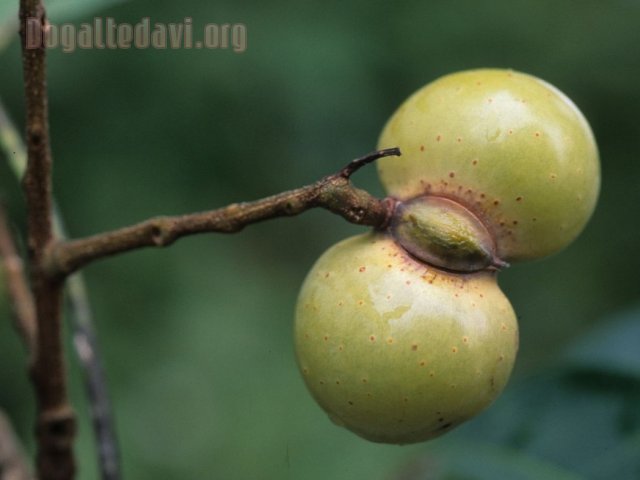
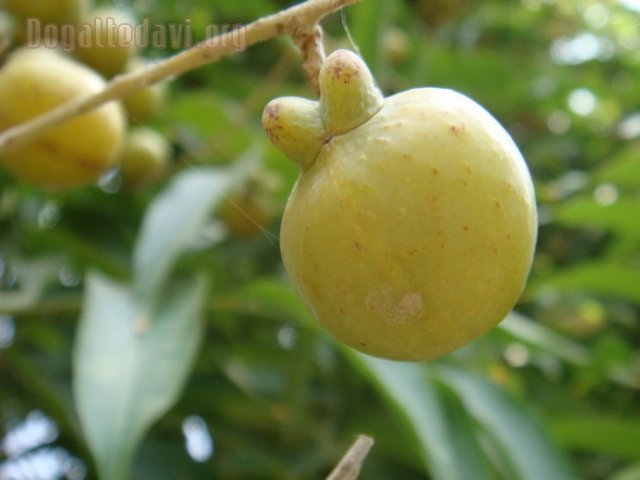
      It flowers during summer. The flowers are small and greenish white, polygamous and mostly bisexual in terminal thyrses or compound cymose panicles. These are sub-sessile; numerous in number and at times occur in lose panicles at the end of branches. The fruit appears in July-August and ripens by November-December. These are solitary globose, round nuts 2 to 2.5 cm (1 in) diameter, fleshy, saponaceous and yellowish brown in color. The seed is enclosed in a black, smooth and hard globose endocarp. The fruit is collected during winter months for seed and/or market sales as "soap nut".The Sapindus Mukorossi tree is one of several that bear fruits that are commonly referred to as soap nuts, of them the soapnuts from the Sapindus Mukorossi tree have the highest saponin content. Saponin is a natural detergent commonly used for cleaning among many other things. Soapnuts have been used medically as an expectorant, emetic, contraceptive, and for treatment of excessive salivation, epilepsy, psoriasis, head lice and migraines. Studies have shown that saponin from soap nuts inhibit tumor cell growth. Soap nuts are among the list of herbs and minerals in Ayurveda. They are a popular ingredient in Ayurvedic shampoos and cleansers. They are used in Ayurvedic medicine as a treatment for eczema and psoriasis. Soap nuts have gentle insecticidal properties and are traditionally used for removing lice from the scalp. Soapnuts have long been used in the Western world for soap production, usually together with many chemical additives which are not necessary for the actual washing process and are damaging to the user as well as our environment. Soapnuts have become a very popular environmentally friendly alternative to these manufactured chemical detergents.

      The seeds tend to germinate easily. To ensure the best results for germination, the seed is soaked in warm water for at least 24 hours and then sown (some prefer to scarify the seed surface prior to soaking by filing, scraping or carefully striking), either directly in already prepared pits at 5m x 5m (16 ft 16 ft) spacing or sown in pots filled with clayey loam soil mixed with farmyard manure or similarly prepared nursery beds.
      Sapindus species are also a common food source for the larvae of some Lepidoptera species including Endoclita Malabaricus.

      Botanical Information:Botanical Name: Sapindus Mukorossi
      Common Names: Soapnut, Soap Nut, Soapberry, Soap Berry, Washnut, and Wash Nut.
      Common Names (in Hindi): Ritha, Reetha, Aritha, Dodan, Doadni, Doda, Kanma and Thali
      Kingdom: Plantae - Plants
      Subkingdom: Tracheobionta - Vascular plants
      Superdivision: Spermatophyta - Seed plants
      Division: Magnoliophyta - Flowering plants
      Class: Magnoliopsida - Dicotyledons
      Subclass: Rosidae
      Order: Sapindales
      Family: Sapindaceae – Soapberry family
      Genus: Sapindus – Soapberry
      Species : Sapindus Mukorossi – Chinese soapberry
      Genus Information:Sapindus is a genus of about twelve species of shrubs and small trees in the Sapindaceae (soapberry family), native to warm temperate to tropical regions in both the Eastern and Western Hemispheres. The genus includes both deciduous and evergreen species.

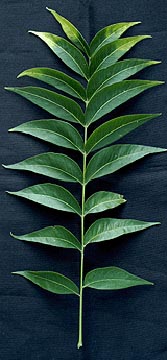
      The leaves are alternate, 15-40 cm long, pinnate, with 14-30 leaflets, the terminal leaflet often absent. The flowers form in large panicles, each flower small, creamy white. The fruit, called a soap nut, is a small leathery-skinned drupe 1-2 cm diameter, yellow ripening blackish, containing one to three seeds.

      Species Information:
      * Sapindus delavayi NA China, India.
      * Sapindus drummondii Western Soapberry Southern United States, Mexico
      * Sapindus emarginatus NA Southern Asia.
      * Sapindus marginatus Florida Soapberry Florida to South Carolina
      * Sapindus mukorossi Chinese Soapberry India, Southern China
      * Sapindus oahuensis Hawaii Soapberry, Lonomea Hawaii (endemic)
      * Sapindus rarak NA Southeast Asia
      * Sapindus saponaria Wingleaf Soapberry Florida Keys, Caribbean, Central America.
      * Sapindus tomentosus NA China.
      * Sapindus trifoliatus South India Soapnut, Three-leaf Soapberry Southern India, Pakistan.


      LAUNDRY

      You will find experimentation will be the best way to find how soap nuts will best suit your needs. When using them in the laundry make sure you take the following things into consideration; type of water you have hard or soft, size or your washing machine, size of the load you are washing, how soiled the items your washing are and the temperature you are washing at. For an average load of laundry you will use 3-4 shells (or equivalent in pieces), larger and dirtier may require 5-8 shells and smaller loads may only need 2-3, harder waters may require more. Muslin/Cotton sacks are the most common things used for doing laundry with soap nuts and usually come with any soap nut purchase, but contrary to popular belief you don't need to buy one if you don't have one. Chances are you can use something you already have like an old mismatched sock, an end piece of tights or stockings, a bandana or hankie or if your crafty sew one out of an old t shirt, rag or piece of cloth (cotton, canvas and hemp all work well). Once you have your pouch situation figured out, put the shells in it, tie it shut, and drop it in the washing machine with your dirty laundry. You will not need to add any other detergent. Soapnuts wash most effectively between 30 and 60 degrees c (86 and 140 f) and will last on average about 2-4 washes. When the Saponin has been exhausted from the shells for laundry use they will look dark and feel soggy, at this point you can safely throw them on your compost heap or put them aside for making a mild soap nut liquid (see making soapnut liquid instructions below). They also make a great hand soap, just toss them in your blender with some water and viola hand soap. Doing laundry with soap nuts leaves your clothes incredibly soft without the need for fabric softeners or conditioners, so usage of fabric softener is no longer needed. However cleaning your laundry with soap nuts doesn't leave your laundry with much of a fragrant scent, so if you prefer laundry with a scent, you can add a few drops of essential oils to the wash. You can apply a few drops directly to your soap nut pouch before adding it to your washing machine or alternatively you may add it to some water and pour it in you softener tray or ball.

      Soapnuts are highly-effective and gentle at the same time. It will leave your laundry fresh and clean and compared to other detergents, its mildness will keep colors bright, and maintain the fabric structure of your clothes for longer periods. It can be used on all fabrics including delicates like silk, cashmere and wool. Soapnuts are all natural, hypoallergenic, biodegradable, ecological, and economical!If you prefer soapnut liquid use approx. 3 tablespoons (or 45ml) per laundry load (see making soapnut liquid instructions below)

      DISH WASHER
      Use soapnut liquid for washing your glasses, dishes, cutlery and pans as usual. Don’t be deceived by the lack of bubbles on the effectiveness of the cleaning. There are no artificial foaming agents so there will be very few if any lasting bubbles. Alternatively, just put 3 shells in the bottom of the cutlery holder and some vinegar in the rinse aid dispenser and your dishes will come out sparkling clean. (for more info see soapnut liquid making instructions below)

      CLEANING & DETOXIFYING FOOD
      Soak your fruit and vegetables for approximately 10-15 minutes in the soapnut liquid. Rinse off and enjoy this food free from harmful chemicals and residue. This soap nut solution can then be reused for household cleaning

      CLEANING JEWELRY

      Soap nuts are commonly used in Indian households for cleaning and shining jewelry. Jewelry is soaked in soap nut liquid and then rubbed with a cloth to give it a shine.

      NATURAL PESTICIDE
      Using soap nuts is an effective and natural alternative to repel insects off your plants and around the house. This easily replaces chemicals. This is a great use for left over soap nut liquid from washing or laundry.

      SHAMPOO
      Simply use soap nut liquid in place of your regular shampoo! Since soapnut liquid does not foam like regular shampoo its easy to use to much liquid. If you find your hair is feeling dry or greasy you probably used to much. For best results reuse a shampoo bottle with a pump to help determine how much you need. It will naturally help prevent dandruff and keep your hair soft and strong. When using to treat dandruff apply the liquid soap nut on your scalp and leave on for 5-10 minutes. Make sure the liquid does not get into the eye as it will burn. Rinse hair with water. Also works well as a body wash!
      Making Soap Nut Liquid:

      SOAPNUT LIQUID (aka soap nut juice)

      Add about 100g (about 2 handfuls) of Soap Nut Shells to approximately 12 cups (3L) of water. Crush the shells into smaller pieces before adding. Bring to boil, and simmer for approximately 30 minutes. The boiling process extracts the saponin from the nut shells and combines with the water. You can use the liquid immediately, or let it steep overnight. Strain into appropriate container and compost the remaining shells. You now have a concentrated, chemical free detergent that can then be used as a laundry detergent, shampoo, all purpose cleaner, car wash, liquid soap, pet shampoo, washing up liquid or any other things you would normally clean with a liquid. Experiment with longer boil times and water to shell ratios for stronger and weaker concentrations.

      Storing Soap Nuts:

      Soap nuts absorb moisture very easily. They become dark & sticky in a very short period of time if left exposed to air. Ideally the nuts should be packed in an airtight container or a plastic bag tied tight with a rubber band. However, sticky soap nuts do not mean that they have gone bad. They will still wash & clean perfectly. Soap nut powder, however, if not stored perfectly in air tight conditions, will become lumpy very easily. Once in lump form, the powder is difficult to use, even though it still retains all its original washing properties.

      Yorum yap


      • #4

        Ritha (Sapindus Mukorossi) Bitkisi Nedir?


        Ritha (Sapindus Mukorossi, Sapindus Emarginatus,Sapindus trifoliatus, soapnut tree)
        Hindistanda yetişen birağaçtır. Ayrıca sabun somun ağacı olarak bilinen Asya ve alt tropical bölgelerin en önemli ağacıdır. Meyveleri Temmuz ve Ağustos'ta görülür. Kasım ve Aralık aylarında olgunlaşır. Ritha odunsu sert ve açık sarı renktedir. Çinde köylüler sabun yapmak için kullanırlar. Ritha cilde sürüldüğünde cildi güzelleştirir. Çilleri giderir. Sıvı sabun ve şampuan olarak kullanılır.Hindistan da ve Nepal de çok uzun yıllardan beri halk çamaşırlarını yıkamada kullanır. Ülkemiz geçmişinde var olan kil ile çamaşır yıkama gibi. Ağacın meyvesi cilde sürüldüğünde cildi güzelleştirdiği için yerel halk arasında çok kıymetli bir bitkidir. Doğal şampuan olarak kullanırlar.Kimyasal, insan sağlığına zarar veren, ışıltılı temizlik vaatleri ile biz insanları tuzağına düşüren ürünlerle kirlendiğimizin bilincine varan kişiler arasında temizlik ürünü olarak kullanılan ideal bitkiler arasındadır. Ritha bitkisi başta İngiltere olmak üzere pek çok avrupa ülkasinde doğal ve organik ürün marketleri ya da reyonlarında kıymet gören ve işlem görmeden dahi sabun olarak kullanılan bir bitkidir.Ritha ev temizliği insan vücudu ve evcil hayvan temizliğinde kullanılır. Enfeksiyon ve böcek sokmalarına karşı kalkandır.Ayrıca cildi besler ve yumuşatır pürüzsüzlük sağlar. Çatlamış cildi özellikle elleri ve topukları onarır. Saç bakımında, kepek önleyici etkisi vardır. Saçı temizlemede etkili doğal bir köpüktür.Saçı besler saçlı deriyi onarır.Vücutta bit ve parazitlere karşı koruyucu etkilidir. Rithanın egzema, kronik kaşıntı ve sedef hastalığı gibi cilt şikayetlerinde de etkili olduğu kanıtlanmıştır.Deterjan olarak kullanıldığında, kimyasal optik ağartıcılara ihtiyaç kalmadan beyazlatır. yünlü ve ipekleri yıkamak için özeldir.mutfak temizliğindede ritha çok değerlidir.Diş temizleme, mücevher parlatma cam temizliği ve araba yıkama da çok etkilidir.Bitki sprey olarak püskürtüldüğünde haşere yaprak biti ve kara sinekte dahil olmak üzere kullanılan ortamdan uzaklaştırır.özellikle allerjik olan için,nörodermatit yakınan ve hassas ciltler için kimyasal deterjanlar oyun oynar.ayrıca birçok deterjan alerjen içerir.Ritha ile doğallığın keyfini yaşayacaksınız.Diş çürüklerinin tedavisinde çok önemlidir. cildi temizler,saç toniğive saç temizleyici olarak kullanılan zengin ve doğal bir köpüktür. saçı temizler ve besler parlaklık kazandırır.içeriğindeki 55 etken madde ve kırmızı neons sayesinde renkleri canlandırır biyosidal ve antibakteriyeldir.

        Yorum yap


        • #5
          Pharmacological effects of Sapindus mukorossiEfeitos farmacológicos do Sapindus mukorossiAparna Upadhyay; D.K. SinghMalacology Laboratory, Department of Zoology, DDU Gorakhpur University, Gorakhpur, 273009, U.P. IndiaCorrespondence to
          SUMMARYSapindus mukorossi is an extremely valuable medicinal plant, distributed in tropical and sub-tropical regions of Asia. The aim of present review is to form a short compilation of the phytochemical composition and pharmacological properties of this multipurpose tree. The main phytoconstituents isolated and identified from different parts of this plant are triterpenoidal saponins of oleanane, dammarane and tirucullane type. The structure and chemical names of all the types of triterpenoidal saponins reported in Sapindus mukorossi are included in this review. Many research studies have been conducted to prove the plant's potential as being spermicidal, contraceptive, hepatoprotective, emetic, anti-inflammatory and anti-protozoal. The present review highlights some of the salient pharmacological uses of Sapindus mukorossi.Keywords: Sapindus mukorossi; Pharmacology; Saponins.

          RESUMO
          Sapindus mukorossi é planta medicinal extremamente valiosa distribuÃ*da nas regiões tropical e subtropical da Ásia. O propósito da presente revisão é uma compilação curta da composição fitoquÃ*mica e das propriedades farmacológicas desta árvore que apresenta múltiplos propósitos. O principal fitoconstituinte isolado e identificado das diferentes partes desta planta são as saponinas triterpenoidais do tipo da oleana, damarana e tiruculana. A estrutura e o nome quÃ*mico de todos os tipos de saponinas triterpenoidais encontrados noSapindus mukorossi estão incluÃ*dos nesta revisão. Muitas pesquisas tem sido conduzidas para provar o potencial desta planta como espermaticida, contraceptivo, hépato-protetor, emético, anti-inflamatório e anti-protozoário. A presente revisão exalta alguns principais usos farmacológicos do Sapindus mukorossi.

          INTRODUCTION
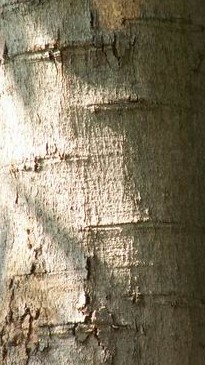
          Sapindus mukorossi Gaertn., a member of the family Sapindaceae, is commonly known by several names such as soapnut, soapberry, washnut, reetha, aritha, dodan and doadni. It is a deciduous tree widely grown in upper reaches of Indo-Gangetic plains, Shivaliks and sub Himalayan tracts at altitudes from 200 m to 1500 m. TheSapindus mukorossi is a fairly large, deciduous tree with a straight trunk up to 12 meters in height, sometimes attaining a height of 20 m and a girth of 1.8 m, with a globose crown and rather fine leathery foliage. Bark is dark to pale yellow, fairly smooth, with many vertical lines of lenticels and fine fissures exfoliating in irregular wood scales. The blaze is 0.8-1.3 cm, hard, not fibrous, pale orange brown, brittle and granular. Leaves are 30-50 cm long, alternate, paripinnate; common petiole very narrowly bordered, glabrous; leaflets 5-10 pairs, opposite or alternate, 5-18 by 2.5-5 cm, lanceolate, acuminate, entire, glabrous, often slightly falcate or oblique; petioles 2-5 m long. Inflorescence is a compound terminal panicle, 30 cm or more in length, with pubescent branches. Flowers are about 5 mm across, small, terminal, polygamous, greenish white, subsessile, numerous, mostly bisexual. Sepals 5, each with a woolly scale on either side above the claw. Fruits are globose, fleshy, 1-seeded drupe, sometimes two drupels together, about 1.8-2.5 cm across. Seeds are 0.8-1.3 cm in diameter, globose, smooth, black and loosely placed in dry fruit7.The fruit is valued for the saponins (10.1%) present in the pericarp and constitutes up to 56.5% of the drupe known for inhibiting tumor cell growth37. In China and Japan it has been used as a remedy for centuries. In Japan its pericarp is called "enmei-hi", which means "life prolonging pericarp" and in China "wu-huan-zi", the "non-illness fruit"37. The major compounds isolated from Sapindus mukorossi are triterpenoidal saponins of mainly three oleanane, dammarane and tirucullane types. Recently many of the pharmacological actions of this plant have been explored which includes the antimicrobial19, cytotoxic29, molluscicidal16,42, insecticidal12,26, piscicidal44 and fungicidal37,41 activities. One of the most talked about activities of this plant is the contraceptive activity of the saponins extracted from the pericarp of the fruit11,27.Sapindus mukorossi is well known for its folk medicinal values30. Pericarps of Sapindus mukorossi have been traditionally used as an expectorant as well as a source of natural surfactant20. Due to the presence of saponins, soapnut is well known for its detergent and insecticidal properties and it is traditionally used for removing lice from the scalp. The fruits are of considerable importance for their medicinal value for treating a number of diseases like excessive salivation, pimples, epilepsy, chlorosis, migranes, eczema and psoriasis21. The powdered seeds are employed in the treatment of dental caries, arthritis, common colds, constipation and nausea8. The seeds of Sapindus mukorossi are used in Ayurvedic medicine to remove tan and freckles from the skin. It cleanses the skin of oily secretion and is even used as a cleanser for washing hair as it forms a rich, natural lather. The leaves are used in baths to relieve joint pain and the roots are used in the treatment of gout and rheumatism. Since ancient times Sapindus mukorossi has been used as a detergent for shawls and silks. The fruit of Sapindus mukorossi was utilized by Indian jewelers for restoring the brightness of tarnished ornaments made of gold, silver and other precious metals33.

          PHYTOCHEMICAL CONSTITUENTSThe major constituents of Sapindus mukorossi fruit are saponins (10%-11.5%), sugars (10%) and mucilage10. Saponins are secondary plant metabolites with divergent biological activities10. Sapindus saponins are a mixture of six sapindosides (sapindosides A, B, C, D and mukorozi saponins (E1 and Y1), with sapindoside B as one of the major constituents, isolated by n-butanol extraction of the ethanolic extract of fruit pericarp of Sapindus mukorossi and identified by liquid chromatography and mass spectroscopy28. Saponins are a large family of structurally-related compounds of steroid or triterpenoid aglycone (sapogenin) linked to one or more oligosaccharide moieties by glycosidic linkage. The aglycone, or sapogenin, may contain one or more unsaturated C-C bonds. The oligosaccharide chain is normally attached at the C3 position (monodesmosidic), but many saponins have an additional sugar moiety at the C2,6 or C2,8 position (bidesmosidic)10. The great complexity of the saponin structure arises from the variability of the aglycone structure, the nature of the side chains and the position of attachment of these moieties on the aglycone10. The carbohydrate moiety consists of pentoses, hexoses or uronic acids. Due to this complexity, saponins are difficult to classify. Because it is no longer customary to classify compounds based on their physicochemical or biological properties, a state of the art classification based on the biosynthesis of the saponin carbon skeletons was proposed by VINCKEN et al.43.Different types of triterpene, saponins of oleanane, dammarane and tirucullane type were isolated from the galls, fruits and roots of Sapindus mukorossi. Oleanane type triterpenoid saponins named Sapindoside A&B (Fig. 34 & 35) were reported from the fruits of Sapindus mukorossi6. Sapindoside C (Fig. 36)4, Sapindoside D (Fig. 37)5, which is a hexaoside of hederagenin, and Sapindoside E (Fig. 38)3, a nonaoside of hederagenin, was isolated and identified from the methanolic extract of the fruits of Sapindus mukorossi.

          Dammarane-type saponins, named Sapinmusaponins A & B (Fig. 11 & 12), C-E (Fig. 15, 16, 17), together with three known phenylpropanoid glycosides, were isolated from the galls of Sapindus mukorossi45. Tirucallane-type saponins, sapinmusaponins F-J (Fig. 18-22), were isolated from the galls of Sapindus mukorossi as reported by HUANG et al.17. The structures of these saponins were elucidated on the basis of spectroscopic analysis including 1D and 2D NMR techniques.
          Triterpene saponins of oleanane type like, Sapinmusaponin K-N (Fig. 25-28), Mukorozisaponin G & E1 (Fig. 29-30), Sapindoside A & B along with dammarane types like Sapinmusaponin O and P (Fig. 13 & 14) were isolated from fruits and the galls of Sapindus mukorossi as per HUANG et al.15. In another study by NAKAYAMA et al.23, Mukorozisaponin Y1 (Fig. 31), Y2 (Fig. 32), X (Fig. 33) were isolated from the pericarp of Sapindus mukorossi.Fractionation of an ethanolic extract of the galls of Sapindus mukorossi has resulted in the isolation of two tirucallane type triterpenoid saponins, sapinmusaponin Q and R (Fig. 23-24), along with three known oleanane type triterpenoid saponins: sapindoside A, sapindoside B, and hederagenin-3-O-[β-D-xylopyranosyl-(1→3)]-α-L-rhamnopyranosyl-(1→2)+-α-L arabinopyranoside14. The roots of Sapindus mukorossi contain tirucallane-type triterpenoid saponins like Sapimukoside A & B38, Sapimukoside C&D25. Further investigation of the roots ofSapindus mukorossi by NI et al.24 reported the presence of Sapimukosides E-J24. The structures of Sapimukosides A-J are shown in Fig. 1 to Fig. 10 respectively. Table 1 shows whole view of all the saponins isolated from Sapindus mukorossi.

          BIOLOGICAL EFFECTS1. Anti-bacterial activity: IBRAHIM et al.19 evaluated that ethanolic and chloroform extracts of Sapindus mukorossi inhibited the growth of Helicobacter pylori (both sensitive and resistant), at very low concentrations, when given orally for seven days to male wister rats. In the in vitro study, the isolates show a considerable zone of inhibition at very low concentration (10 µg/mL) and in the in vivo study the Helicobacter pylori infection was cleared with minimal dose extracts of 2.5 mg/mL.

          2. Insecticidal activity: Saponins possess insecticidal activity, causing mortality and/or growth inhibition in the insects tested, the cotton leafworm Spodoptera littoralis caterpillars and the pea aphid Acyrthosiphon pisum. In the experiments with Acyrthosiphon pisum, 0.1% saponin killed all aphids, whereas with Spodoptera some caterpillars were still able to develop into apparently normal adults on food containing 7% saponin12. Saponins can be employed as novel natural tactics in integrated pest management (IPM) to control pest insects, which fit in modern agriculture and horticulture13. Ethanolic extract of Sapindus mukorossi was investigated for repellency and insecticidal activity against Sitophilus oryzae and Pediculus humanus. Average mortality percentage indicated that the extracts caused significant mortality and repellency on the target insects and bioassays indicated that toxic and repellent effect was proportional to the concentration26.

          3. Spermicidal activity: Saponins from Sapindus mukorossi are known to be spermicidal11,27. Morphological changes in human ejaculated spermatozoa after exposure to this saponin were evaluated under scanning electron microscopy. The minimum effective concentration (0.05% in spot test) did not affect the surface topography after exposure for one minute. However, incubation of spermatozoa for 10 minutes resulted in extensive vesiculation and a disruption of the plasma membrane in the head region. Higher concentrations (0.1%, 1.25%, 2.5% and 5.0%) caused more or less similar changes which included vesiculation, vacuolation, disruption or erosion of membranes in the head region. These findings suggest that the morphological changes observed are due to alterations in the glycoproteins associated with the lipid bilayer of the plasma membrane of spermatozoa8. This spermicidal property has been used in contraceptive cream9.

          4. Anti-Trichomonas activity: TIWARI et al.39 demonstrated that the Sapindus saponin mixture shows anti-Trichomonas activity at a 10-fold lower concentration (0.005%) than its minimal effective spermicidal concentration against human spermatozoa (0.05%)11. Saponin concentration dependently inhibited the ability of parasites to adhere to HeLa cells and decreased the proteolytic activity of the parasite's cysteine proteinases. This was associated with the decreased expression of adhesin AP65 and membrane-expressed cysteine proteinase TvCP2 genes. Saponins produced no adverse effect on host cells in the mitochondrial reduction potential measurement assay. Saponin disrupts the actin cytoskeleton network beneath the cell membrane and affects membrane-mediated adherence of Trichomonas to the host cells.

          5. Anti-cancer activity: Due to the great variability in saponin structure, saponins always display anti-tumorigenic effect through varieties of anti-tumor pathways. There are more than 11 distinguished classes of saponins including dammaranes, tirucallanes, lupanes, hopanes, oleananes, taraxasteranes, ursanes, cycloartanes, lanostanes, cucurbitanes and steroids. Ginsenosides, belonging to dammaranes, have been found beneficial in the inhibition of tumor angiogenesis by suppressing its inducer in the endothelial cells of blood vessels, and then in the prevention of adhering, invasion and metastasis of tumor cells22. Dioscin, one of the steroidal saponins, and its aglycone diosgenin also has an extensive anti-tumor effect by cell cycle arrest and apoptosis22. The preliminary bioassay data revealed that saponins [39,4]-43] showed moderate cytotoxic activity (ED50~9-18µg/mL) against human tumor cell lines (Hepa59T/VGH, NCL, HeLa and Med)29. Strychnopentamine was the reference compound used in the study. All saponins were reported to be at least five times less active than the reference compound36.

          6. Hepatoprotective activity: IBRAHIM et al.18 reported that the extracts of Sapindus mukorossi (2.5 mg/L) and Rheum emodi (3.0 mg/L) have a protective capacity both in vitro on primary hepatocytes cultures and in vivo in a rat model of tetrachloride carbon (CCl4) mediated liver injury as judged from serum marker enzyme activities. These cultures were treated with CCl4 and extracts of Sapindus mukorossi & Rheum emodi. A protective activity could be demonstrated in the CCl4 damaged primary monolayer culture. For the in vivo study, the hepatoprotective capacity of the extract of the fruit pericarp of S. mukorossi and the rhizomes of Rheum emodi was analyzed in liver injured CCl4- treated male rats. Extracts of the fruit pericarp of Sapindus mukorossi(2.5 mg/mL) and rhizomes of Rheum emodi (3.0 mg/mL) were found to have protective properties in rats with CCl4 induced liver damage as judged from serum marker enzyme activities. Thus, it was concluded that the extracts of Sapindus mukorossi and Rheum emodi do have a protective capacity both in vitro on primary hepatocytes cultures and in in vivo in a rat model of CCl4 mediated liver injury.

          7. Anxiolytic activity: Methanolic extracts of Sapindus mukorossi (200 and 40 mg/L) show significant anxiolytic activity as compared to standard anxiolytics Diazepam (2 mg/Kg) and Fluoxetine (10 mg/Kg)1.

          8. Molluscicidal activity: Extracts of Sapindus mukorossi showed molluscicidal effect against the golden apple snail, Pomacea canaliculata Lamarck. (Ampullariidae) with LC50 values of 85, 22 and 17 ppm at 24, 48 and 72h exposure period, respectively16. Bioassay-directed fractionation of Sapindus mukorossi resulted in the isolation of one new hederagenin-based acetylated saponin, hederagenin 3-O-(2,4-O-di-acetyl-α-l-arabinopyranoside)-(1→3)-α-L-rhamnopyranosyl-(1→2)-α-L-arabinopyranoside [1], along with six known hederagenin saponins, hederagenin 3-O-(3,4-O-di-acetyl-α-L-arabinopyranoside)-(1→3)-α-L-rhamnopyranosyl-(1→2)-α-L-arabinopyranoside [2], hederagenin 3-O-(3-O-acetyl-β-D-xylopyranosyl)-(1→3)-α-L-rhamnopyranosyl-(1→2)-α-L-arabinopyranoside [3], hederagenin 3-O-(4-O-acetyl-β-D-xylopyranosyl)-(1→3)-α-L-rhamnopyranosyl-(1→2)-α-L-arabinopyranoside [4], hederagenin 3-O-(3,4-O-di-acetyl-β-D-xylopyranosyl)-(1→3)-α-L-rhamnopyranosyl-(1→2)-α-L-arabinopyranoside [5], hederagenin 3-O-β-D-xylopyranosyl-(1→3)-α-L-rhamnopyranosyl-(1→2)-α-L-arabinopyranoside [6], and hederagenin 3-O-α-L-arabinopyranoside [7]. The bioassay data revealed that 1-7were molluscicidal, causing 70-100% mortality at 10 ppm against the golden apple snail16.UPADHYAY & SINGH42 reported that Sapindus mukorossi fruit pericarp is a potential source of botanical molluscicides against Lymnaea acuminata. These snails are the intermediate host of liver fluke Fasciola gigantica, which causes 94% fascioliasis in the buffalo population of northern India32. The active molluscicidal component of Sapindus mukorossi fruit is soluble in chloroform, ether, acetone and ethanol. The toxicity of ethanolic extract of Sapindus mukorossi fruit powder is higher than other extracts which indicates that the molluscicidal component present is more soluble in ethanol than other organic solvents. UPADHYAY & SINGH42characterized that saponin is the active component present in Sapindus mukorossi fruit by High Performance Liquid Chromatography. A comparison of the molluscicidal activity of the column-purified fraction of Sapindus mukorossi fruit powder with synthetic molluscicides clearly demonstrates that the purified fraction of Sapindus mukorossi is more potent. The LC50 at 96 h of the column–purified fraction of Sapindus mukorossi fruit powder (5.43 mg/L) against Lymnaea acuminata is lower than those of synthetic molluscicides-carbaryl (14.40 mg/L), phorate (15.0 mg/L), formothion (8.56 mg/L) and niclosamide (11.8 mg/L)32. LC50 at 96 h of crude powder ofSapindus mukorossi (119.57 mg/L) against Lymnaea acuminata is lower than the crude powder of Canna indicaroot (359.02 mg/L)40, Thuja orientalis leaf powder (250.55 mg/L), Thuja orientalis fruit powder (255.12 mg/L)31,Zingiber officinale rhizome (273.80 mg/L), Allium cepa bulb (253.27 mg/L)34.

          9. Tyrosinase inhibition and free radical scavenging: CHEN et al.2 first evaluated that the extracts ofSapindus mukorossi seeds using methanol (MeOH), ethyl acetate (EA) or hexane as solvents show tyrosinase inhibition, free radical scavenging, antimicrobial and anticancer properties. Sapindus mukorossi extracts showed strong specific inhibition activities on the proliferation of human melanoma and lung cell lines. The data exhibited the high potential of applying Sapindus mukorossi extracts in medical cosmetology, food supplementation, antibiotics and chemotherapy.

          10. Fungicidal activity: The crude extract of Sapindus mukorossi exhibits a strong growth inhibition against the pathogenic yeast Candida albicans, which causes cutaneous candidiasis. Extracts from the dried pericarp ofSapindus L. (Sapindaceae) fruits were investigated for their antifungal activity against clinical isolates of yeastsCandida albicans and Candida non-albicans from vaginal secretions of women with Vulvovaginal Candidiasis. Four clinical isolates of C. albicans, a single clinical isolate of each of the species C. parapsilosis, C. glabrata, C. tropicalis, and the strain of C. albicans ATCC 90028 were used. The hydroalcoholic extract was bioactivity-directed against a clinical isolate of C. parapsilosis, and showed strong activity. The n-BuOH extract and one fraction showed strong activity against all isolates tested41. The saponin fraction inhibited the dermatophytic fungi Trichophyton rubrum, Trichophyton mentagrophytes, Sabouraudites canis and Epidermophyton floccosum37.

          11. Anti-inflammatory activity: TAKAGI et al.35 reported that crude saponin and hederagenin isolated fromSapindus mukorossi inhibited the development of carrageen-induced edema in the rat hind paw as well as on granuloma and exudates formations induced by croton oil in rats. The effects of these agents on vascular permeability and acetic acid induced writhing in mice were also examined. Anti-inflammatory activity on carrageenin edema was observed after intraperitoneal and oral administration of crude saponin, whilst hederagenin and the other agents showed activity only when administered.12. Piscicidal activity: Effects of Sapindus mukorossi have been studied on fish. Pericarp of Sapindus mukorossi is the most toxic parts yielding 100% mortality within 12 hours and mean survival time was found to be 1.18 hours. LD10, LD50, LD100 ranging between 3.5 ppm and 10 ppm at 48 hrs and possess high potential for fish eradication. Sapindus mukorossi fruit pericarp can be used as a selective eradicant for horny fish likeHeteropneustes fossils and channa punctuate44.

          13 Anti-platelet aggregation activity: HUANG and co workers demonstrated that five new tirucallane type saponins, sapinmusasaponins from the galls of Sapindus mukorossi, showed moderate activity in a 12-0-tetradecanoylphorbol-13-acetate (TPA)-induced Epstein-Barr virus early antigen (EBV-EA) activation assay25.

          DISCUSSIONSapindus mukorossi is a versatile and exceptionally valuable medicinal plant. It is known by such regional names as soapnut, soapberry, washnut, reetha and dodan. The phytochemical screening of the plant extract showed the presence of saponins (10.1%) present in the pericarp of the fruit. The use of Sapindus mukorossi in folk medicine worldwide30 is validated by scientific studies that have demonstrated the efficacy of the extracts in various experimental models. Pharmacological effects of Sapindus mukorossi have been reported like anti-bacterial19, insecticidal12,13,26, spermicidal11,27, anti-trichomonas11,39, anti-tumor22,29,36, hepatoprotective18, anxiolytic1, molluscicidal16,42, fungicidal37,41, anti-inflammatory35 and piscicidal44 activities and are being employed for the treatment of different ailments in the indigenous system of medicine. Although a number of phytochemicals present in Sapindus mukorossi have been isolated and identified by researchers working in different laboratories, their pharmacological/biological studies in human welfare has not been studied so far.Most of the scientific study is confined to the elaboration of traditional practices of Sapindus mukorossi. There is a long list of saponins present in Sapindus mukorossi. It needs individual attention so that they can be explored in different pharmacological studies. The literature reviewed gives a limited picture of pharmacological effects of Sapindus mukorossi. There is a need for much additional research regarding pharmacological effects ofSapindus mukorossi at molecular level to explain their mode of action.

          CONCLUSIONSapindus mukorossi is a tropical tree whose numerous economic applications and whose facility of propagation are arousing international interest. It needs to be widely cultivated in most of the areas where climatic conditions favor its optimum growth. In this way, a maximum yield of its different usable parts could be achieved to derive the maximal amount of commodities of a multifarious nature for the welfare of mankind. This plant has been used as traditional medicine for various ailments. The earlier reports on chemical investigation and pharmacological evaluation showed that Sapindus mukorossi contains a number of bio-active novel compounds. As literature illustrates, many biological and pharmacological activities are shown by fractions of crude extracts and isolated substances. Furthermore, the detailed chemical analysis is required to isolate bio-active constituents from Sapindus mukorossi and to trace out their biological activities. Thus, it can be concluded that Sapindus mukorossi can play an important role in modern medical system in near future.

          ACKNOWLEDGEMENTOne of the authors Aparna Upadhyay is thankful to Department of Science and Technology, New Delhi for financial assistance (Inspire Fellowship number- IF10296).

          REFERENCES1. Chakraborty A, Amudha P, Geetha M, Surjit Singh N. Evaluation of anxiolytic activity of methanolic extract ofSapindus mukorossi Gaertn. in mice. Int J Pharm Bio Scie. 2010;1:1-8. [ Links ]2. Chen CY, Kuo PL, Chen YH, Huang JC, Ho ML, Lin RJ, et al. Tyrosinase inhibition, free radical scavenging, antimicroorganism and anticancer proliferation activities of Sapindus mukorossi extracts. J Taiwan Inst Chem Engrs. 2010;41:129. [ Links ]3. Chirva V, Kintya PK, Sosnovskii VA. Triterpene glycosides of Sapindus mukorossi. V. The structure of sapindoside E. Chem Nat Compounds. 1970;6:440-2. [ Links ]4. Chirva V, Kintya PK, Sosnovskii VA. Triterpene glycosides of Sapindus mukorossi. III. The structure of sapindoside C. Chem Nat Compounds. 1970;6:380-1. [ Links ]5. Chirva V, Kintya PK, Sosnovskii VA, Zolotarev BM. Triterpene glycosides of Sapindus mukorossi. IV. The structure of sapindoside D. Chem Nat Compounds. 1970;6:316-8. [ Links ]6. Chirva V, Kintya P, Sosnovskii VA, Krivenchuk PE, Zykova NY. Triterpene glycosides of Sapindus mukorossi. II. The structure of Sapindoside A & B. Chem Nat Compounds. 1970;6:213-5. [ Links ]7. Chopra R, Ghosh S. Poisonous plants of India. Delhi: The Manager of Publishers; 1946. p. 308. [ Links ]8. Dhar JP, Bajpai VK, Setty BS, Kamboj VP. Morphological changes in human spermatozoa as examined under scanning electron microscope after in vitro exposure to saponins isolated from Sapindus mukorossi. Contraception. 1989;39:563-8. [ Links ]9. Dwivedi AK, Chaudhry M, Sarin JPS. Standardization of a new spermicidal agent Sapindus saponin and its estimation in its formulation. Indian J Pharm Sci. 1990;52:165-7. [ Links ]10. Francis G, Kerem Z, Makkar H, Becker K. The biological action of saponins in animal systems: a review. Br J Nutr. 2002;88:587-605. [ Links ]11. Garg S, Taluja V, Upadhyay M, Talwar GP. Studies on contraceptive efficacy of Praneem polyherbal cream. Contraception. 1993;48:591-6. [ Links ]12. Geyter ED, Geelen D, Smagghe G. First results on the insecticidal action of saponins. Commun Agric Appl Biol Sci. 2007;72:645-8. [ Links ]13. Geyter ED, Lambert E, Geelen D, Smagghe G. Novel advances with plant saponins as natural insecticides to control pest insects. Pest Tech. 2007;1:96-105. [ Links ]14. Huang HC, Tsai WJ, Liaw CC, Wu SH, Wu YC, Kuo YH. Anti-platelet aggregation triterpene saponins from the galls of Sapindus mukorossi. Chem Pharm Bull (Tokyo). 2007;55:1412-5. [ Links ]15. Huang HC, Wu MD, Tsai WJ, Liao SC, Liaw CC, Hsu LC, et al. Triterpenoid saponins from the fruits and galls of Sapindus mukorossi. Phytochemistry. 2008;69:1609-16. [ Links ]16. Huang HC, Liao SC, Chang FR, Kuo YH, Wu YC. Molluscicidal saponins from Sapindus mukorossi, inhibitory agents of Golden Apple snails Pomacea canaliculata. J Agric Food Chem. 2003;51:4916-9. [ Links ]17. Huang HC, Tsai WJ, Morris-Natschke SL, Tokuda H, Lee KH, Wu YC, et al. Sapinmusaponins F-J, bioactive tirucallane-type saponins from the galls of Sapindus mukorossi. J Nat Prod. 2006;69:763-7. [ Links ]18. Ibrahim M, Khaja MN, Aara A, Khan AA, Habeeb MA, Devi, YP, et al. Hepatoprotective activity of Sapindus mukorossi and Rheum modi extracts: in vitro and in vivo studies. World J Gastroenterol. 2008;14:2566-71. [ Links ]19. Ibrahim M, Khan AA, Tiwari SK, Habeeb MA, Khaja MN, Habibullah CM. Anti-microbial activity of Sapindus mukorossi and Rheum modi extracts against Helicobacter pylori: in vitro and in vivo studies. World J Gastroenterol. 2006;12:7136-42. [ Links ]20. Kasai R, Fujino H, Kuzuki T, Wong WH, Goto C, Yata N, et al. Acyclic sesquiterpene oligoglycosides from pericarps of Sapindus mukorossi. Phytochemistry. 1986;25:871-6. [ Links ]21. Kirtikar KR, Basu BD. Indian medicinal plants. Allahabad: B.L.M. Publication; 1991. [ Links ]22. Man S, Gao W, Zhang Y, Huang L, Liu C. Chemical study and medical application of saponins as anti-cancer agents. Fitoterapia. 2010;81:703-14. [ Links ]23. Nakayama K, Fujino H, Kasai R, Mitoma Y, Yata N, Tanaka O. Solubilizing properties of saponins fromSapindus mukorossi Gaertn. Chem Pharm Bull (Tokyo). 1986;34:3279-83. [ Links ]24. Ni W, Hua Y, Liu HY, Teng RW, Kong YC, Hu XY, et al. Tirucallane-type triterpenoid saponins from the roots of Sapindus mukorossi. Chem Pharm Bull (Tokyo). 2006;54:1443-6. [ Links ]25. Ni W, Hua Y, Teng RW, Kong YC, Chen CX. New tirucallane-type triterpenoid saponins from Sapindus mukorossi. J Asian Nat Prod Res. 2004;6:205-9. [ Links ]26. Rahman SS, Rahman M, Begum SA, Khan MMR, Bhuiyan MH. Investigation of Sapindus mukorossi extracts for repellency, insecticidal activity and plant growth regulatory effect. J Appl Sci Res. 2007;3:95-101. [ Links ]27. Rastogi RP, Mehrotra BN. Compendium of Indian medicinal plants. New Delhi: CDRI Publication; 1999. p. 609-10. [ Links ]28. Saxena D, Pal R, Dwivedi AK, Singh S. Characterization of sapindosides in Sapindus mukorossi saponin (Reetha saponin) and quantitative determination of sapindoside B. J Sci Ind Res. 2004;63:181-6. [ Links ]29. Sengupta A, Basu SP, Saha S. Triglyceride composition of Sapindus mukorossi seed oil. Lipids. 1975;10:33-40. [ Links ]30. Sharma A, Sati SC, Sati OP, Sati D, Maneesha Kothiyal SK. Chemical constituents and bioactivities of genusSapindus. Int J Res Ayurveda Pharm. 2011;2:403-9. [ Links ]31. Singh A, Singh VK. Molluscicidal activity of Saraca asoca and Thuja orientalis against the fresh water snailLymnaea acuminata. Vet Parasitol. 2009;164:206-10. [ Links ]32. Singh DK, Agarwal RA. In vivo and in vitro studies on synergism with anticholinesterase pesticides in the snail Lymnaea acuminata. Arch Environ Contain Toxicol. 1983;12:483-7. [ Links ]33. Singh N, Kaur A, Yadav K. A reliable in vitro protocol for rapid mass propagation of Sapindus mukorossiGaertn. Nat Sci. 2010;8:41-7. [ Links ]34. Singh S, Singh VK, Singh DK. Molluscicidal activity of some common spice plants. Biol. Agric. Hortic. 1997;14:237-49. [ Links ]35. Takagi K, Park EH, Kato H. Anti-inflammatory activities of hederagenin and crude saponin isolated fromSapindus mukorossi Gaertn. Chem Pharm Bull(Tokyo). 1980;28:1183-8. [ Links ]36. Takechi M, Tanaka Y. Structure-activity relationships of the saponin a-hederin. Phytochemistry. 1990;29:451-2. [ Links ]37. Tanaka O, Tamura Y, Masuda H, Mizutani K. Application of saponins in food and cosmetics: saponins ofMohova Yucca and Sapindus mukorossi Gaertn, saponins used in food and agriculture. New York: Plenum Press; Waller GR and Yamasaki K; 1996. p.1-11. [ Links ]38. Teng RW, Ni W, Hau Y, Chen CX. Two new tirucallane-type triterpenoid saponins from Sapindus mukorossi. Acta Botanica Sinica. 2003;45:369-72. [Article in Chinese] [ Links ].39. Tiwari P, Singh D, Singh MM. Anti-Trichomonas activity of Sapindus saponins, a candidate for development as microbicidal contraceptive. J Antimicrob Chemother. 2008;62:526-34. [ Links ]40. Tripathi SM, Singh DK. Molluscicidal activity of Punica granatum bark, Canna indica root. Braz J Med Biol Res. 2000;33:1351-5. [ Links ]41. Tsuzuki JK, Svidzinski TIE, Shinobu CS, Silva LFA, Rodrigues-Filho E, Cortex DAG, et al. Antifungal activity of the extracts and saponins from Sapindus saponaria L.. An Acad Bras Cienc. 2007;79:577-83. [ Links ]42. Upadhyay A, Singh DK. Molluscicidal activity of Sapindus mukorossi and Terminalia chebula against the freshwater snail Lymnaea acuminata. Chemosphere. 2011;83:468-74. [ Links ]43. Vincken JP, Heng L, de Groot A, Gruppen H. Saponins, classification and occurrence in the plant kingdom. Phytochemistry. 2007;68:275-97. [ Links ]44. Virdi, GS. The piscicidal properties of Acorus calamus, Sapindus mukorossi and Xeromphis spinosa on 7 species of fishes of North India. Indian J Phys Nat Sci. 1982;2:28-35. [ Links ]45. Yao HK, Hui CH, Li-Ming YK, Ya-Wen H, Kuo-Hsiung L, Fang-Rong C, et al. New dammarane-type saponins from the galls of Sapindus mukorossi. J Agric Food Chem. 2005;53:4722 -7.

          Yorum yap


          • #6
            Grow a SoapNuts Tree (SAPINDUS mukorossi)


            • Deciduous
            • Belongs to the Sapindacae family
            • Produces Soapnut berries in 9-10 years
            • The berries produced are the most widely used for washing, the seeds do not produce sapion
            • Small flowers turn to yellow leathery skinned fruit and turn black when ripe
            • May grow to 12-20 meters high in 70 years, will be smaller in cooler climates
            • It is a tropical/subtropical tree & enjoys warm climates with annual rainfalls of 150-200cm
            • Grows in deep clayey loam soil
            • Position in a sunny spot

            The SoapNuts tree is deciduous and can grow between 12-20 metres with a trunk girth of 3-5m in 70 years and prefers tropical and subtropical conditions. In cooler conditions the tree grows smaller.It is a handsome tree found throughout most of India, and also found in China, Hawaii and Florida. The leaves measure 40cm long. The tree resembles large Mimosa trees to some extent.It takes 9-10 years for the trees to produce the SoapNuts berries. It flowers during summer and the berries are collected during winter months. When the tree fruits, collect ripe berries, sun dry, and then crack and deseed before use. Use the soapnut berry shell to wash, and replant seeds.Germination

            Plant as soon as you receive your seeds. Do not store.1. You have to weaken the seeds coat. Use a nail file or sand paper to scarify. If you find it too tough, you can hammer the seed. Please be careful and do not to crush the seed. We just want to weaken the seed coat.2. Soak the seed overnight in warm/hot water. Do not use boiled water, let it sit for 5 minutes. Then fill up a vacuum-insulated thermos with the seeds and water, and let it soak for 24 hours. The thermos will keep the water warm throughout that period. The soaking process is particularly important, as the water is what activates the germination.3. Plant the seeds (best time of the year spring to early summer). Use good potting soil (not dirt - good quality potting/germinating soil). Plan the seeds at a depth of 2.5cm. Choose a pot that is deep, as SoapNut trees send down vertical tap roots. Put the pot(s) in a place where it will not be in direct sun, and where it can catch some rainfall. Water the pots if the soil starts to dry, but don't water if it is still moist (that can promote fungal growth.) Also, avoid fertilizing the soil before germination occurs - high levels of nitrogen in the soil can actually inhibit germination in general.4. Wait and watch the seeds growing. The germination process can take 1 to 3 months (in summer months) . In cooler months a little more patience will be needed, you will need to ensure that the seed mix is warm and provide sufficient light.5. Look after your trees.In time the seed will swell in size, almost to double its original size and forms a white powder coating around the seed coating. Don't be concerned when you see this, it is a good sign that the seedling is about to emerge.As soon as the seedling emerges, you will need to re-pot into a large container or plant bag to protect the very long main root. This is a sub-tropical/tropical plant that loves rain, so keep in a sunny spot and water regularly.

            Yorum yap


            • #7
              Reetha

              Botanical Name(s): Sapindus Mukorossi
              Family Name: Sapindaceae
              Kingdom: Plantae
              Subkingdom: Tracheobionta (Vascular plants)
              Division: Magnoliophyta (Flowering plants)
              Class: Magnoliopsida (Dicotyledons)
              Subclass: Rosidae
              Order: Sapindales
              Family: Sapindaceae (Soapberry family)
              Tribe: Andropogoneae
              Genus: Sapindus (Soapberry)
              Species: Sapindus Mukorossi (Chinese soapberry)
              Popular Name(s): Soapnut, Soap Nut, Soapberry, Soap Berry, Washnut, and Wash Nut, Ritha, Aritha, Dodan, Doadni, Doda, Kanma and Thali
              Parts Used: Soapnuts, Soapnut Shells, Soapnut Shells Powder
              Habitat: Temperate to Tropical regions throughout North India and Nepal in hills and plains in deep clayey loam soil with areas experiencing nearly 150 to 200 cm of annual rainfall.

              Description
              An attractive medium sized deciduous tree, Reetha (Sapindus mukorossi), stands up to 20 m in height, with gray smooth bark and pinnate leaves. The tree bears leaves in 5-10 pairs, with large drupes. The trunk of the tree is straight and cylindrical, going 13-16 ft in height and has an umbrella-like hemisphere measuring about 16 ft in diameter. The tree is ever-growing and in 70 years of existence, it can attain a height of up to 82 ft and a girth of up to 9-16 ft. The size of the leaflets tapers towards the tip of the rachis.

              The flowers on Reetha plant grow during the summer season and are small in size and greenish white in color. The fruit appears in July and August and ripens by the months of November and December. This ripened fruit is then either sold in the market as soap nut or collected for seeds, as they tend to germinate easily. The dried fruit has a soapy texture and is used to prepare quality shampoos, detergents and a substitute for washing hands. Moreover, the plant is soft and green when it is fresh.

              Plant Chemicals
              3-O-agr-L-rhamnopyranosyl-(1?2)-[agr-L-arabinopyranosyl-(1?3)]-ß-D-glucopyranosyl (21,23R)-epoxyl tirucalla-7,24-diene-(21S)-ethoxyl-3ß-ol (1) and 3-O-agr-L-rhamnopyranosyl-(1?2)-[agr-L-arabinopyranosyl-(1?3)]-ß-D-glucopyranosyl (21,23R)-epoxyl tirucall-7, 24-diene-(21S)-methoxyl-3ß-ol (2).

              Uses & Benefits of Reetha

              • Reetha is used as the main ingredient in soaps and shampoos for washing hair, as it is considered good for the health of hair. The trend of washing hair with soapnut (reetha) is still followed in many local households.
              • The jewelers in India use this plant to bring back the lost brightness of ornaments made of precious metals like gold, silver, etc.
              • The herb is also used in the treatment of extra salvation, migraine, epilepsy and chlorosis.
              • It has been placed as a popular herb in the list of herbs and minerals in Ayurveda and is used as an important ingredient in cleansers and shampoos. In addition, it is used for the treatment of eczema, psoriasis, and for removing freckles.
              • Reetha is also used for removing lice from the scalp, as it has gentle insecticidal properties.
              • The plant is known for its antimicrobial properties that are beneficial for septic systems.
              • It is an important herb that is used in the treatment of contaminated soil. Moreover, it has also been used for washing and bleaching cardamoms, further helping in improving the latter’s color and flavor.

              Caution
              • Reetha has no adverse effects, but direct contact with the eyes should be avoided.

              Yorum yap


              • #8


                Photo: Wikimedia Commons.


                The soap nut tree Sapindus Mukorossi aka Indian Soapberry is a very large tree that produces prodigious amounts of a soaponifying nut that you can use as a greywater safe laundry detergent, dish and hand soap. Mrs. Homegrown wants to rip out my beloved Mission Fig tree to plant the one that Craig atWinnetka Farms gave us last year. I’m going to chain myself to the fig.
                That being said, I wish we had more room to plant our soapnut tree. Sapindus Mukorossi requires a fertile soil and a frost free climate. It’s a tall tree that can take as long as ten years to begin fruiting. A friend of mine has one growing in Altadena.
                Sapindus Mukorossi needs lots of water. Craig has pointed out the perfect permacultural pairing for our dry climate–use the greywater from your washing machine to water your soap nut tree.
                It can be a bit tough to get the seeds to germinate. Here’s some instructions on how to grow Sapindus Mukorossi from seed.
                If you’re in LA you can buy a tree from the folks at Winnetka Farms.
                I vote for Sapindus Mukorossi as LA’s next street tree . . .

                Yorum yap


                • #9
                  Soapnuts
                  We are a family run business and following the success of our own experiences with Soapnuts - my son suffered quite badly with eczema until we started using them. Ever since we have been a personal quest to be more environ
                  mentally conscious.

                  Soapnuts have been featured on the BBC show ‘Not Easy Going Green’ and BBC Radio 4 as well as many well known websites such as ‘mumsnet’ recommending them. In America and in Germany the use of soap nuts is well established as they been imported there for many years now.
                  What are Soapnuts?

                  Soapnuts are known worldwide by many names such as soapberry, Reetha (Hindi), Chinese soapberry and many more. Very simply, soapnuts are the dried shells or husks from the soapberry tree.Based upon its high amount of 'soap' content ( 12 - 18% ) and consistency, the highest quality soapnut is Sapindus Mukorossi, which grows primarily in northern India and Nepal. The soapnut tree grows uncultivated in poor quality ground and helps fights erosion, particularly in the Himalayan foothills. It also provides needed income to the local population.It is a relatively hardy tree being resistant to diseases and insects (due to the high amounts of saponin which are a natural pest and insect repellent for the tree!) To see how well it works try our organic pesticide recipe. The tree grows to 10 to 20 meters in height and begins flowering and bearing fruit after about 9 years. The tree has great longevity and will produce fruit (soap nuts) for about 90 years.The saponin contained in these soapnuts which produces a soaping effect, is a 100% natural alternative to chemical laundry detergent and cleansers. It can replace many chemical detergents such as those containing sodium laureth sulphate (SLS) that are becoming well known by consumers for being a skin irritant and health hazard. The detergent which goes out as waste also has the antimicrobial properties which causes cleaning of the drainage and sewer system and thus becomes eco-friendly.
                  There are many kinds of shells that have saponin (chestnut is one). However the sapindus (soapnut) trees have an abundance. There are actually ten varieties of sapindus, but we only sell sapindus mukurossi, because these yield the most saponin (soap) when mixed with water. In nature saponin is a mild insecticide and anti-bacterial compound, it is used to repel bugs and fungus from tress naturally!We only sell 100% Sapindus Mukurossi, because it has the highest amount of saponin in the shell and will be most effective when used for cleaning. Don't be fooled by cheaper, less effective products.

                  Not all soapnuts will clean or sud in the same way. We have test-driven six different varieties/suppliers before deciding on these - sapindus mukurossi. We paid a bit more to ensure we got the right kind of soapnuts, so that they will yield the most saponin and as a result more suds and more cleaning power!You may find soapnuts elsewhere on the internet but not all soapnuts are created equal! There are other soapnut varieties like Sapindus rarak and Sapindus trifoliatus that do not have the same amount of soap and will therefore not be as effective. Some other suppliers may mix these for a cheaper product, which will mean it will not be as effective as our soapnuts.Soapnuts are highly-effective and gentle at the same time. It will leave your laundry fresh and clean and compared to other detergents, its mildness will keep colours bright, maintaining fabric structure of your clothes for longer periods. It can be used on all fabrics and at all temperatures. There are so many benefits of using soapnuts!
                  How Do Living Naturally Soapnuts Get To The UK?Local farmers / families harvest the fruit after it falls from the tree. A linen is spread under the tree to catch the mature fruits when they fall down. The shells are then dried and cleaned, the seeds are removed and we are left with the soapnut shells. The soapnut seeds can then be replanted. The leftover shells are dried in the sun using absolutely no chemical processing. Our organically certified supplier is also involved in contract farming. It means that they are supplying the farmers with selected input including technical advice if required. The soapnut collectors are given a wage on per kg sold basis.

                  No commercial manufacturing processes are required in any way for the soapnut to become effective. Hence, soapnuts are absolutely 100% natural, unmodified dried fruit shells.

                  Next, they are packaged up and shipped to the UK for distribution. We ship them instead of flying them over, so your conscience can rest easy on the carbon footprint. We would grow them here but the soapnut berries would not produce enough saponin because of the lack of sunshine. However we are looking into alternatives.
                  Soapnuts Used In Ayurvedic PracticesSoapnut powder is used extensively in Ayurveda for the treatment of scalp issues such as hair loss, dandruff, and to alleviate parasites such as lice (You can use a solution of Soapnuts in the garden to repel pests as persistent as aphids). In modern India, Soapnuts are an essential ingredient in hair care products to increase lustre and softness of hair. The Soapberry is among the most important trees for beautification in tropical Asia, aesthetics being an important factor in Ayurveda. Used topically, Soapnuts are used to eliminate freckles, fine lines, chemical stains and cracks in the skin. They are also used traditionally to treat mild to moderate skin complaints such as eczema and psoriasis. Soapnuts are safe for people with sensitive skin, even people who suffer allergic reactions to store bought "sensitive skin" cleansers. To make your own soapnut powder cleanser click here

                  Soapnuts are even safe enough to use as toothpaste and as a fruit and vegetable wash. A ten-minute soak in a solution of Soapnuts removes 95% of the surface pesticides and chemical residues on fresh produce. Soapnuts are also useful in the kitchen as a food-safe cleaner for countertops, appliances, and sinks.

                  In India the list of uses for reetha is impressive, claiming over 20 medicinal preparations, which alter the fruit to make it either 100% digestible or emetic. Reetha fruit is so rich in iron it is considered a haemolytic and is used often to treat anaemia. When prepared by an Ayurvedic doctor it can treat chlorosis and epilepsy. It is also used as an expectorant for severe lung congestion, and can help to promote blood circulation in patients with low blood pressure. Reetha is a sedative to the uterus and is used to ease childbirth. It can also be prepared as a digestive aid, an anti-venom, or to treat diarrhoea, cholera and paralysis.

                  There have been clinical trials on the use of Sapindus mukorossi as a spermicide (replacing Nonoxynal-9, which has shown to lead to widespread sexually transmitted infections.) Recent studies by Chinese researchers show that the saponins in Soapnuts inhibit tumour cell growth in humans. Indian researchers show that a solution made from the fruit of Sapindus trifolatus decreases behaviours associated with migraines in mice. Early Vedic medical texts describe thick solutions made by crushing and adding water to reetha fruit that were used regularly to pacify folks suffering from chronic viral infections and headaches. There is also evidence it was used to treat hysteria.

                  - See more at: Buy Soapnut shells online - UK, London, International, Retail and Wholesale

                  Yorum yap

                  Hazırlanıyor...
                  X